Costs
How to Budget a Social Media Giveaway in Canada: Costs in CAD
Social media giveaway cost Canada CAD runs from a few hundred dollars to five figures, with Quebec rules and skill-testing questions adding their own lines.
What to take away
- A single-prize Canadian giveaway usually costs $400 to $3,000, and the prize is the biggest line.
- It usually runs on Facebook, Instagram, TikTok, X or YouTube, and each platform's promotion rules add a disclosure line rather than a fee.
- A national campaign with paid ads and Quebec entrants runs $1,500 to $9,000.
- A random draw needs a mathematical skill-testing question, which costs time rather than money.
- Quebec draws above the provincial threshold need a filing, a duty and French rules.
- One-off costs cover rules and filing; recurring costs cover ads, admin and entrant data.
What the range covers
The money goes to four places. First, the prize. Second, the paperwork that keeps the draw legal in Canada. Third, promotion, where most of the spending sits. Fourth, everything after a win, from shipping to answering data requests. First-time budgets fund the prize and the ads, then forget the paperwork and the follow-up.
Figures below are illustrative ranges, not quotes. Use them to ask for a written price. Treat reach as a range with sources attached, the way major social networks data does.
Which platforms carry the giveaway
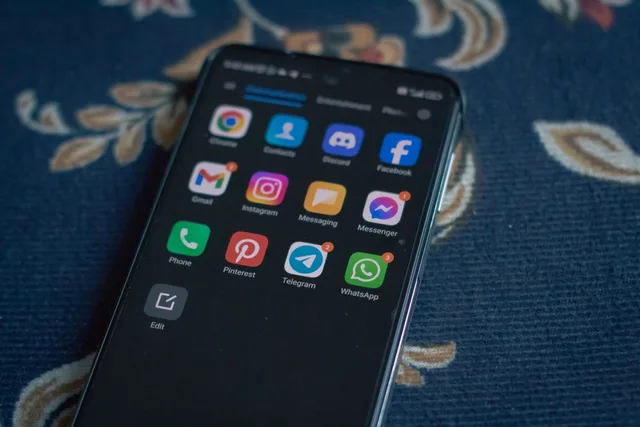
Canadian giveaways almost always run on Facebook, Instagram, TikTok, X or YouTube, and each of those platforms has its own promotion policy. Meta covers Facebook and Instagram, TikTok has branded-content and promotion rules, X and YouTube publish their own. Their rules share the same basics: official rules entrants can read, a release of liability, and a statement that the platform does not sponsor or endorse the promotion. None of them drafts your rules, builds your skill-testing question or files in Quebec for you.
The boost budget goes to the same names. Meta Ads, TikTok Ads and X Ads sell reach through their own auctions, and YouTube ads sell through Google Ads. What a Canadian campaign pays per thousand impressions or per click moves with the format, the audience and the season, so treat any boost number from a platform's ad manager as a range rather than a fixed line.
Line by line in CAD
| Line item | Low (CAD) | High (CAD) | Cost type |
|---|---|---|---|
| Prize value | 100 | 5,000 | One-off |
| Rules drafting and skill-testing question | 0 | 750 | One-off |
| Quebec filing and duty above the threshold | 100 | 900 | One-off |
| French translation of rules and posts | 75 | 500 | One-off |
| Paid promotion and boosted posts | 100 | 3,000 | Recurring |
| Creator or influencer posts | 0 | 1,500 | Recurring |
| Winner verification and shipping | 25 | 150 | One-off |
| Administration and entrant data cleanup | 0 | 600 | Recurring |
At the low end, a shop running a $100 gift card draw on its own page stays under $500. At the high end, a national campaign with a $5,000 prize, paid ads and Quebec entrants passes $9,000.
Giveaway cost lines in CAD
- Prize value100–5,000
- Rules and skill question0–750
- Quebec filing and duty100–900
- French translation75–500
- Paid promotion100–3,000
- Creator posts0–1,500
- Verification and shipping25–150
- Admin and data cleanup0–600
Promotion is the line most likely to grow. Creator fees are quoted per post rather than per entry, so influencer marketing rates are hard to tie to results. When a paid creator reaches American viewers, US disclosure rules apply, as the FTC guidance for influencers explains.
One-off against recurring
One-off lines are paid once for a single draw: rules, the skill-testing question, the Quebec filing and duty, translation, winner verification. Recurring lines repeat with every draw or every month: ad spend, creator fees, tool subscriptions, administration, data cleanup. Mixing the two turns a $600 plan into a $6,000 commitment.
One-off vs recurring costs
One-off
- Rules and skill question
- Yes
- Quebec filing and duty
- Yes
- French translation
- Yes
- Paid promotion
- No
- Creator fees
- No
- Admin and data cleanup
- No
Recurring
- Rules and skill question
- No
- Quebec filing and duty
- No
- French translation
- No
- Paid promotion
- Yes
- Creator fees
- Yes
- Admin and data cleanup
- Yes
Run the same draw monthly and the setup lines stay flat while promotion does not. Confirm whether one Quebec filing covers a series or each draw, because that answer moves the total by hundreds of dollars. Community platforms compared by structure beats a list of popular apps when you choose where entries land.
What the tools do not cover
Platform entry tools such as Gleam, Rafflecopter, Woobox and ShortStack collect names and email addresses. They do not draft rules, produce a skill-testing question, file in Quebec, or check entrant ages. Collecting personal data brings the Personal Information Protection and Electronic Documents Act into play, and Canada's PIPEDA overview explains the obligations.
Many contest tools bill in US dollars. A plan priced at US$79 a month sits near CAD 110 at an exchange rate around 1.35, and the gap moves with the currency. Canadian budgets need a currency line.
Tax is a line too. Most invoices a giveaway generates — ads, translation, rules drafting, creator fees — carry GST/HST in Canada and QST in Quebec. A business registered for GST/HST claims that tax back as an input tax credit, so it does not stay in the net cost. An operator who is not registered absorbs it.
Where budgets leak
- Quebec filing completed before the contest opens
- French rules published alongside the English version
- Skill-testing question solved by someone other than its author
- Shipping quoted for remote provinces, not just the nearest three
- Retention period for entrant data written into the rules
Leaks follow a pattern. An unclaimed prize means a second draw and a second round of verification. Shipping to a remote province can cost more than the prize itself. Rush translation doubles the bill.
Giveaway budget leak checklist
- Quebec filing completed before contest opens
- French rules published alongside English
- Skill-testing question solved by someone else
- Shipping quoted for remote provinces
- Entrant data retention period written into rules
If the draw runs on a platform you do not own, leaving a decentralized network covers what changes when the account goes quiet.
The two lines that break a giveaway budget are rarely the prize. They are the second draw after an unclaimed win, and the Quebec filing nobody booked.
Example: a $2,500 draw open across Canada
A retailer gives one $2,500 prize to residents of every province. Rules and the skill-testing question come to $400. The Quebec filing and duty add $300. Translation costs $250. Boosted posts run $1,200. Shipping is $60, and fifteen hours of administration at $35 an hour is $525. The total lands near $5,235.